
SURAH AL-IKHLAS OF HOLY QURAN
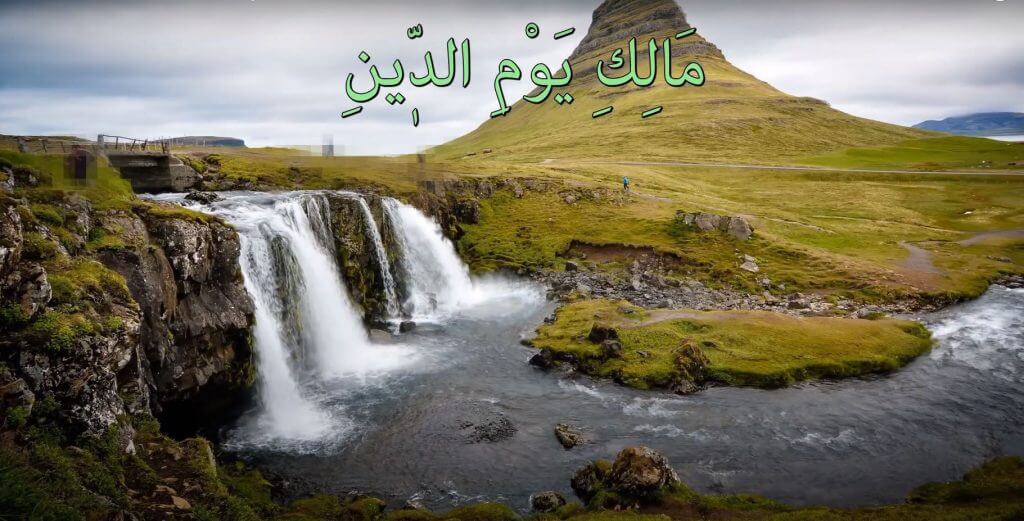
One of Most important Surah of Quran. Everybody have to learn it. Surah al-ikhlas is a short declaration of tawhid, God’s absolute unity, consisting of 4 ayat. Watch the Surah al-Ikhlas Video with nature view and Word-by-Word Tracing;

You Will Get The Reward For Reciting the whole Quran 1/3 Times and Build 10 Palaces in Jannah Insha Allah.
Other Benefits:
- Abundance in wealth
- Safety in travelling
- Hajat
- Protection from ‘evil eye’
“And, for example, others which the unfair atheists supposed to be exaggeration and even impossible overstatement are narrations about the rewards for actions and merits of some of the Qur’an’s Suras. For example, there are narrations that, “The merit of Sura al-Fatiha is equal to that of the Qur’an.”14 And, “Sura al-Ikhlas equals a third of the Qur’an,”15 “Sura al-Zilzal, a quarter,”16 “Sura al-Kafirun, a quarter,”17 “Sura Ya. Sin., ten times the Qur’an.”18 Unjust and unthinking people have said that these are impossible because Sura Ya. Sin. and the other meritorious Suras are within the Qur’an, which makes it meaningless.
The Answer: The reality is this: for each of the All-Wise Qur’an’s letters is a merit. Each is a good deed. Out of Divine grace the merits of those letters sprout and yield sometimes ten, sometimes seventy, and sometimes seven hundred, merits, like the letters of Ayat al-Kursi. Sometimes they yield one thousand five hundred, like the letters of Sura al-Ikhlas, and sometimes ten thousand, like verses recited on Laylat al-Bara’a and those that coincide with other acceptable times. And sometimes they yield thirty thousand, like verses recited on the Night of Power, which are like poppy seeds in their multiplicity. The indication that that night is the equivalent to a thousand months makes it understood that on that night one letter has thirty thousand merits. For example, let us suppose there is a field planted with maize, one thousand plants of it. If some seeds produce seven shoots, and from each shoot a hundred grains, then a single seed becomes the equivalent of two thirds of the whole field. For example, if one seed produces ten shoots, and each yields two hundred grains, then a single seed is the equivalent of twice the original field. You can make further analogies in the same way.
Now, let us imagine the All-Wise Qur’an to be a luminous, sacred, heavenly field. Each of its letters together with its original merit is like a seed. Their shoots will not be taken into consideration. They may be compared with the Suras and verses about which are narrations concerning their merits, like Ya. Sin., Ikhlas, Fatiha, Kafirun, Zilzal. For example, the Qur’an has three hundred thousand six hundred and twenty letters, and Sura al-Ikhlas together with Bismillah, sixty-nine. Three times sixty nine is two hundred and seven letters. Thus, if Sura Ya. Sin.’s letters are reckoned and compared with all the letters of the All-Wise Qur’an, and then multiplied ten times, it produces the following result: each letter of Sura Ya. Sin. has close on five hundred merits. That is, that many good deeds may be reckoned. And so, if you apply the others to this, you will understand what a subtle, fine, true, and unexaggerated truth it is.
————-
14. Bukhari, Tafsir Sura, i, 1; xv, 3; Fada’il al-Qur’an, 9; Tirmidhi, Thawab al-Qur’an, 1.
15. Tirmidhi, Thawab al-Qur’an, 10, 11; Ibn Maja, Adab, 52.
16. Tirmidhi, Thawab al-Qur’an, 9; Musnad, iii, 147, 221.
17. Tirmidhi, Thawab al-Qur’an, 9; Musnad, iii, 147, 221.
18. Tirmidhi, Thawab al-Qur’an, 7; Darimi, Fada’il al-Qur’an, 21.”
Ref: Risale-i Nur, The Words, The 24th Word
IMPORTANCE AND MIRACLE OF SURAH AL-IKHLAS
Sura al-Ikhlas is a treasury of knowledge about Divine unity comprising thirty-six Sura al-Ikhlas’s, formed of a compound of six phrases, each winged. Indeed, like with the stars in the sky which are apparently without order, each is unrestricted and as a sort of centre extends a line of connection to all the stars in the area surrounding it, indicating a hidden relation between beings. It is as if, like the stars of verses, each single star has an eye which looks to all stars and a face which is turned to them. See then the perfect order within the apparent lack of order, and take a lesson! Understand one meaning of the verse,
Ref: Risale-i Nur, The Words, The 13th Word
Similarly, the word-order between words encompasses a broad sphere and has many aspects. And between phrases. For example, Say: He is God, the One (Qur’an, 112:1) contains six sentences. Three of them are positive and three negative. It proves six degrees of Divine unity and at the same time refutes six ways of associating partners with God. Each sentence is both the proof of the other sentences and the result. For each sentence has two meanings. Through one meaning it is the result, and through the other the proof. That is to say, within Sura al-Ikhlas are thirty suras composed of proofs that demonstrate each another to be as well-ordered as the Sura itself. For example:
Say, قُلْ هُوَ اللّٰهُ لِاَنَّهُ اَحَدٌ ، لِاَنَّهُ صَمَدٌ ، لِاَنَّهُ لَمْ يَلِدْ ، لِاَنَّهُ لَمْ يُولَدْ ، لِاَنَّهُ لَمْ يَكُنْ لَهُ كُفُوًا اَحَدٌ (He is God, because He is One, because He is the Eternally Besought, because He begets not, because He is not begotten, because there is none that is equal to Him.)
And:
And وَلَمْ يَكُنْ لَهُ كُفُوًا اَحَدٌ ، لِاَنَّهُ لَمْ يُولَدْ ، لِاَنَّهُ لَم يَلِدْ ، لِاَنَّهُ صَمَدٌ ، لِاَنَّهُ اَحَدٌ ، لِاَنَّهُ هُوَ اللّٰهُ (There is none that is equal to Him, because He is not begotten, because He begets not, because He is Eternally Besought, because He is One, because He is God.)
And:
هُوَ اللّٰهُ فَهُوَ اَحَدٌ ، فَهُوَ صَمَدٌ ، فَاِذًا لَمْ يَلِدْ ، فَاِذًا لَمْ يُولَدْ ، فَاِذًا لَمْ يَكُنْ لَهُ كُفُوًا اَحَدٌ (He is God, so He is One, so He is the Eternally Besought, so He begets not, so He is not begotten, so there is none that is equal to Him.)
ardır.
You can continue in the same way.
…
لَمْ يَلِدْ وَلَمْ يُولَدْ ۞ وَلَمْ يَكُنْ لَهُ كُفُوًا اَحَدٌ (He begets not, nor is He begotten * And there is none like unto Him.)(Qur’an, 112:3-4.)
The share of understanding of this of the ordinary people, which forms the most numerous class: “Almighty God is above having mother and father, relatives or wife.” While the share of a middle class: “It is to deny the divinity of Jesus (Peace be upon him), and the angels, and anything which has been born.” For although denying something impossible is apparently purposeless, according to the rules of rhetoric, a necessary statement is intended, which gives it purpose. Thus, the purpose of denying son and begetter, which are particular to corporality, is to deny the divinity of those who have offspring and parents and equals; and it is to show that they are not worthy of being worshipped. It is because of this that Sura al-Ikhlas is beneficial for everyone all the time. The share of a more advanced class: “Almighty God is above all relations which suggest giving birth and being born. He is exempt from having any partners, helpers, or fellows. His relations with all beings are those of Creator. He creates through His pre-eternal will with the command of “Be!,” and it is. He is far beyond having any relation which is contrary to perfection, or is compelling, necessitating, or involuntary.” And the share of understanding of a higher class still: “Almighty God is pre-eternal and post-eternal, He is the First and the Last. Neither in His essence, nor in His attributes, nor in His actions, has He in any way any equal, peer, like, or match, or anything similar, resembling, or analogous to Him. Only, in His acts, there may be comparisons expressing similarity:
And God’s is the highest similitude.”(Qur’an, 16:60.)
You can draw analogies with the above for other classes, which all receive different shares, like those who have attained knowledge of God, the lovers of God, and the truly sincere.
Ref: Risale-i Nur, The Words, The 25th Word
REFERENCES
1) Risale-i Nur
2) http://qfatima.com/wp-content/uploads/2017/07/The_Benefits_of_Quranic_Suwer_and_Asmaul_Husna.pdf
4) https://www.thelastdialogue.org/article/quran-on-celestial-orbits/
English Translation of Surah Al-Ikhlas
English Translation (Sahih International) of the Surah Al-Ikhlas is as follows;
1: Say, “He is Allah, [who is] One,
2: Allah, the Eternal Refuge.
3: He neither begets nor is born,
4: Nor is there to Him any equivalent.”
NOTE: All of QURAN VIDEOS have 50+ languages’ translations (subtitles). You can see translations of this Surah from the subtitles of the video above.
Translations of Surah Al-Ikhlas in Other Languages
English translation and other languages’ translations of Surah Al-Ikhlas are on the videos at above and below. You may need to click opening the subtitles on the YouTube video player (at right bottom).
- Click the settings icon at the bottom of the video screen.
- Click Subtitles/CC.
- Select a language.
You can see the translations of Surah Al-Ikhlas in the following languages;
Albanian, Amharic, Arabic, Azerbaijani, Bengali, Bosnian, Bulgarian, Catalan, Chinese, Croatian, Czech, Dutch, English, Finnish, French, German, Hausa, Hindi, Icelandic, Indonesian, Italian, Japanese, Kazakh, Korean, Kurdish, Latvian, Malay, Malayalam, Marathi, Norwegian, Pashto, Persian, Polish, Portuguese, Romanian, Russian, Sindhi, Slovak, Somali, Spanish, Swahili, Swedish, Tajik, Tamil, Tatar, Telugu, Thai, Turkish, Urdu, Uyghur, Uzbek
English Transliteration of Surah Al-Ikhlas
Bismillaahir Rahmaanir Raheem (﷽)
- Qul huwal laahu ahad
- Allah hus-samad
- Lam yalid wa lam yoolad
- Wa lam yakul-lahoo kufuwan ahad
Read Surah Al-Ikhlas in Arabic
You can read Arabic Quran
- on the Videos (with Verse by Verse and Word by Word Facility)
- Read Arabic Surah Al-Ikhlas in Miraculous Quran
- Read Arabic Surah Al-Ikhlas and All Arabic Quran
Listen, Read and Learn Surah Al-Ikhlas and Quran (Arabic, English and Audio)
Arabic, English and Audio of Surah Al-Ikhlas
Quran with 29 translations and Audio (Listen Quran Audio from 32 Famous Reciters)
You can read Quran and Quran Translations, listen and download Quran Audio from 32 Famous Quran Reciters.
Tafseer of Surah Al-Ikhlas
And from his narration on the authority of Ibn ‘Abbas that he said regarding the interpretation of Allah’s saying (Say: He is Allah, the One!): ‘(Say: He is Allah, the One!) the people of Quraysh asked the Prophet (pbuh): “O Muhammad! Describe for us your Lord; is He made of gold or silver?” And so Allah revealed this surah to describe His attributes and traits, saying: say to Quraysh, O Muhammad: He is Allah, the One, He has no son or partner.
(Allah, the eternally Besought of all!) the Master whose glory is at its peak and for Whom all created beings are in need; it is also said that (al-Samad) means: He Who does not eat or drink; it is also said that this means: He Who does not have an interior; it is also said that this means: the Everlasting; and it is also said this means: the Sufficient; and it is also said this means: He who does not have an entrance or exit.
And it is also said that al-Samad means: (He begetteth not nor was begotten) He says: He did not inherit and will not be inherited; and it is also said this means: He does not have a son who will inherit His dominion and He was not begotten, which means that He did not inherit His dominion.
(And there is none comparable unto Him) He says: He does not have an opposite, peer, or equal nor anyone who may resemble or begin to resemble Him; and it is also said this means: He does not have any co-equal who would compete with Him about dominion and sovereignty’.
Reference
1) Tafsir Ibn ‘Abbas, Great Commentaries on the Holy Qur’an, translated by Mokrane Guezzou
PLEASE SUBSCRIBE TO OUR YOUBE CHANNEL FOR NEW HD VIDEOS.
Watch Another Recitation of Surah Al-Ikhlas


Welcome to our site. You may also visit our youtube channel (https://www.youtube.com/islamicvideosorg)